The Comedy of Hyperbole
Tell someone your coffee was "fine" and nobody laughs. Tell them it was "the single greatest cup in the history of human civilization, and the barista should win a medal" and you've got a joke. That leap — from the true thing to the absurdly inflated version of it — is hyperbole, and it might be the oldest reliable trick in comedy.
What hyperbole actually is
Hyperbole is deliberate, obvious exaggeration — not meant to deceive, but to emphasize. "I've told you a million times." "This bag weighs a ton." "I died laughing." Nobody checks the math, because nobody's supposed to. The exaggeration is the point. We reach for it constantly in ordinary speech because plain accuracy is often too small for how a moment feels.
Comedy takes that everyday habit and turns the dial all the way up. The trick works because the listener can still see the true, modest fact sitting underneath the enormous claim. You know the coffee was just okay. The fun is in the distance between the two.
The gap is the joke
Most theories of humor circle the same idea: we laugh at a mismatch — something that doesn't fit, resolved in a way that's harmless. Hyperbole is a mismatch machine. It bolts a giant, dramatic frame onto a tiny, ordinary subject, and the brain delights in the mismatch precisely because it's safe. A parking ticket is not actually a national emergency. A late bus is not a betrayal of the republic. When the language insists otherwise, with total confidence, the contrast does the comedic work for you.
That's also why hyperbole reads as style rather than lying. A lie wants to be believed. Hyperbole wants to be seen through. The wink is built in.
An old, old device
This isn't a modern internet invention. Ancient Greek and Roman rhetoricians catalogued hyperbole as a named figure of speech and warned students to use it sparingly. Tall tales, epic boasts, and folk heroes who could lasso tornadoes all run on the same fuel. The comic boast — a character insisting he is the strongest, richest, most beloved figure who ever lived — shows up in theater for thousands of years before it ever showed up in a meme.
Why the broadcast voice leans on it
A certain style of political and promotional speech has turned hyperbole into a full-time job. Everything is the biggest, the best, the most tremendous; every rival is the worst; every result is historic. Stack enough superlatives together, deliver them with total certainty, and you get a cadence so recognizable that people can imitate it instantly. That recognizability is exactly what makes it ripe for parody. The form is already at the edge of self-parody; nudging it one inch further is comedy.
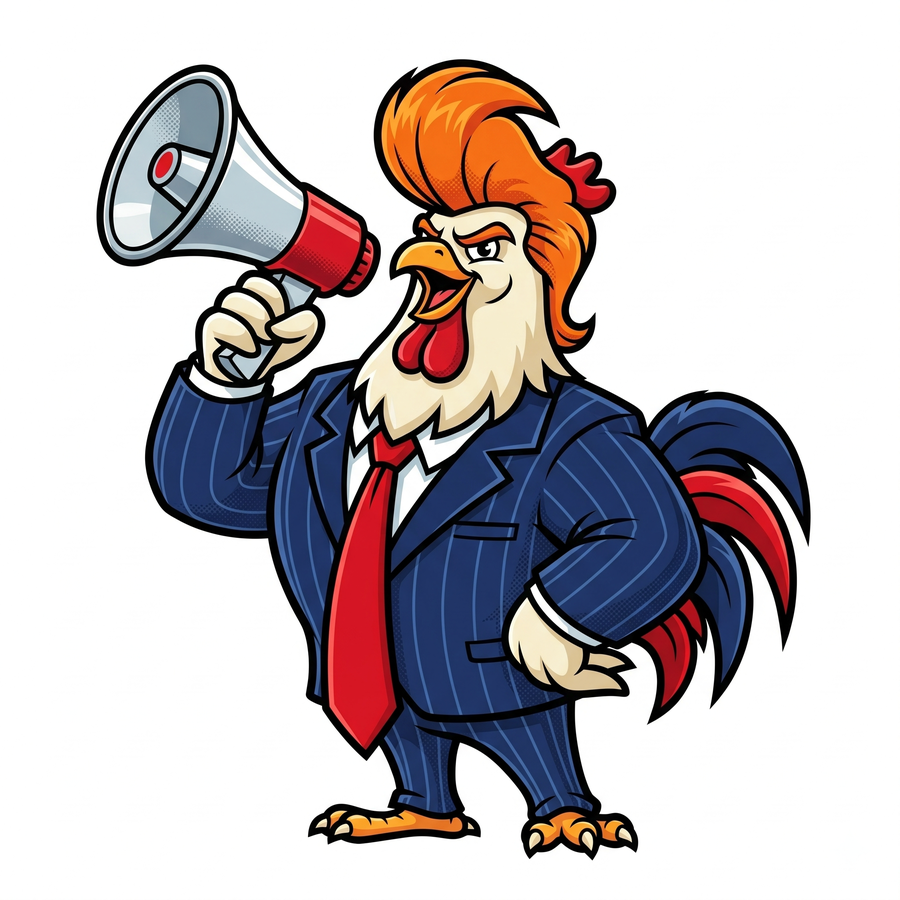
That's the whole engine behind The Magaphone. Feed it something deliberately dull and it applies maximum hyperbole: the office printer becomes a triumph for the ages, a cloudy afternoon becomes the most beautiful weather anyone has ever seen. The meaning never changes — only the size of the language around it.
Using it without overdoing it
Hyperbole is potent, which means it's easy to overuse. A few quick rules keep it funny:
- Anchor it to something real. The joke needs a true, modest fact underneath. Exaggerate the laundry, the email, the commute — things everyone recognizes.
- Commit completely. Half-hearted exaggeration just sounds like a weak claim. Total, straight-faced confidence sells it.
- Keep it obvious. If anyone could mistake it for a real claim, push it further until the wink is unmistakable.
- Quit while you're ahead. One perfect oversized line beats ten in a row.
Exaggeration is one of the friendliest forms of comedy because it asks nothing of the audience except that they know what's normal. We all do. So when the language balloons way past normal and keeps a perfectly straight face, the laugh is almost automatic. Believe me — it's tremendous.
The Magaphone is a satirical, generic style parody. It doesn't imitate any specific real person and never presents its output as a real quote. See About for more.